7 Best Trade Brands for Apparel That Actually Last
· Editorial Team

Last Updated: October 25, 2026
Quick Summary
The best trade brands for apparel depend on the job: Carhartt for heavyweight durability, Dickies and Red Kap for crew uniforms, Gildan and Port & Company for printed blanks, and Pipe Wrench Gang for trade-culture tees and embroidered polos. Match the brand to your actual work, then confirm fabric weight, size range, and any required safety rating before buying in quantity.
- Lightweight shirts under roughly 4.5 oz tend to go thin at the elbows and shoulders first.
- A 5.3 oz heavy cotton tee at $23.99 is built for abrasion and costs about the same as a basic department store shirt.
- The neckline is the single most common failure point on inexpensive tees.
- Request one sample in the largest and smallest size before ordering a crew set.
- Wash work clothes cold and inside out, skip fabric softener, and air dry when you can.
Table of Contents
- What Counts as Trade Apparel (And Who It's For)
- How We Evaluated the Best Workwear Brands
- The Best Trade Brands for Apparel: 7 Picks Compared
- Affordable Workwear Brands That Don't Cut Corners
- Durable Work Clothes: What Separates Good Gear From Landfill Fodder
- How to Care for Work Clothes So They Outlast the Job
- Build Your Pipe Wrench Gang Rotation
- Frequently Asked Questions
What Counts as Trade Apparel (And Who It's For)
Trade apparel is clothing built for people who work with their hands: reinforced seams, heavier fabric, and cuts that let you climb, kneel, and reach without splitting a shoulder, from a shop-day graphic tee to a collared polo for contractor meetings.
At Covey Entertainment, the Pipe Wrench Gang line exists because plumbers, electricians, welders, and HVAC techs kept asking for clothing that looked like their job instead of a generic big-box uniform.
Who it's for: mechanics, construction crews, pipefitters, carpenters, and the women working alongside them. If you want a deeper walkthrough of what separates real workwear from costume workwear, our tough clothing for outdoor work buying guide covers the fabric and construction basics in more detail.
How We Evaluated the Best Workwear Brands
We score trade apparel on four things: fabric weight, stitch quality, size range, and how it moves on a body that bends all day.
The best workwear brands share a few traits: heavier cotton that holds its shape through repeated washing, reinforced necklines that don't stretch into a scoop, and a real size range when you're ordering for a crew of mixed builds.
Fabric Weight and Stitching
Fabric weight is measured in ounces per square yard. Lightweight shirts under roughly 4.5 oz tend to go thin at the elbows and shoulders first. A 5.3 oz heavy cotton tee, like the ones used across the Covey Entertainment catalog, gives you more material to absorb abrasion before a hole appears.
Stitching matters just as much. Look for double-needle hems and a taped neckline.
Fit, Size Range, and Mobility
A classic unisex cut with a straight hem layers under a hoodie or jacket without bunching. Check garment measurements, not body measurements: lay a shirt you like flat, measure chest and shoulder to hem, and match the size chart.
Mobility comes down to how the shoulder and armhole are cut. If you spend the day reaching overhead, a tighter armhole will bind.
The Best Trade Brands for Apparel: 7 Picks Compared
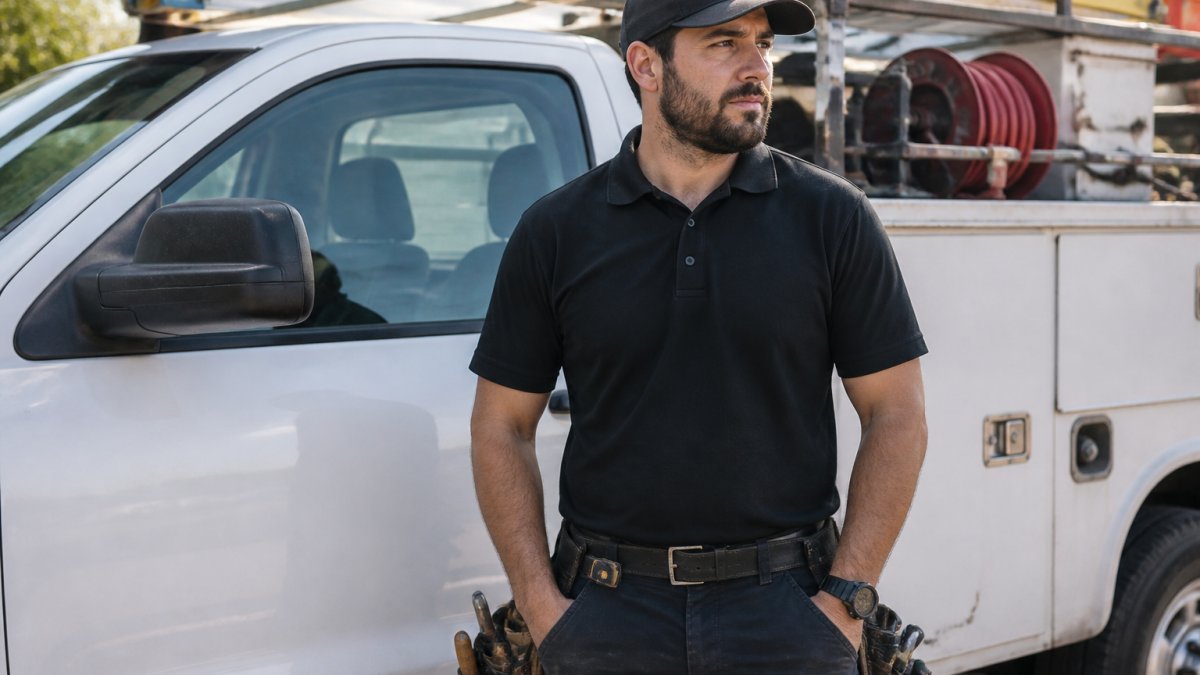
Most "best trade brands" lists blur four different purchases: durable graphic tees for a crew, office-appropriate workwear, safety-compliant jobsite clothing, and custom promotional apparel. A brand that wins one category can be a poor fit for another, so the table below matches the brand to the job.
| Brand | Best known for | Price tier | Size range | Customization | Where it fits a trade buyer |
|---|---|---|---|---|---|
| Carhartt | Heavyweight cotton duck and knit workwear | Mid to premium | S-4XL (varies by style) | Limited direct embroidery; widely available through decorators | Jobsite durability, outerwear, pants |
| Dickies | Affordable twill work pants and uniform shirts | Budget to mid | S-5XL (varies) | Strong uniform and bulk channel | Crew uniforms, pants, shop shirts |
| Red Kap | Uniform and industrial workwear | Budget to mid | S-5XL, some tall sizes | Built around bulk and embroidery programs | Team uniforms, industrial laundry environments |
| Berne | Value workwear and outerwear | Budget | S-5XL (varies) | Limited | Budget crews, layering pieces |
| Gildan | Heavy cotton blanks used by decorators | Budget | S-5XL | Very broad decorator network | Base garment for printed crew tees |
| Port & Company | Decorator-friendly blanks and uniform pieces | Budget | S-6XL (varies) | Broad decorator network | Bulk printed tees and polos |
| Pipe Wrench Gang (Covey Entertainment) | Trade-culture graphic apparel and embroidered polos | Budget to mid | S-5XL on core tees | In-house embroidery and DTG printing | Trade-identity tees, client-facing polos, crew gifts |
Price tier is relative: the same brand can sit in different tiers whether you buy one shirt at retail or 200 through a decorator. Size ranges vary by style, so confirm the SKU before promising a size run.
How to choose between them
Start with the hazard, not the logo. If the job requires high-visibility, flame-resistant, or arc-rated clothing, buy from a safety catalog, Carhartt, Dickies, and Red Kap offer compliant lines, but confirm the specific garment carries your site's required rating.
For team identity, matching tees for a plumbing crew, embroidered polos for estimators, the decision shifts to decoration logistics. Gildan and Port & Company blanks are common because local decorators stock them and hit short lead times.
Where each brand tends to fall short
Carhartt's reputation is earned on outerwear and pants; its lightweight tees aren't automatically tougher than a well-chosen 5.3 oz blank. Dickies and Red Kap win on uniform consistency and bulk availability but offer little trade-culture design.
No single brand wins every row. Pick the row that matches your actual work, then confirm the garment's fabric weight, size availability, and any required safety rating before buying in quantity.
Affordable Workwear Brands That Don't Cut Corners
A lower sticker price hides a shorter lifespan, and cost per wear ends up higher than a well-made shirt you keep for years.
A shirt worn once a week for two years costs less per wear than one that pills and thins after three months, even at half the up-front price. Heavy cotton, taped necklines, and double-needle hems most reliably stretch a garment's life.
Pipe Wrench Gang Embroidered Logo Polo | PWG CLEAN Collection | Blue Collar →
Affordable doesn't mean flimsy. A 5.3 oz heavy cotton tee at $23.99 costs about the same as a basic department store shirt, but its fabric weight and construction are built for abrasion.
Watch out: buying a full set of lightweight tees for a summer crew usually backfires. They fade and thin fast under sunscreen and sweat, and you end up reordering mid-season.
Durable Work Clothes: What Separates Good Gear From Landfill Fodder
"Buy heavier fabric" is true but incomplete: durability is only half the equation, the other half is what a garment costs per month of actual wear. A $60 shirt lasting three years of weekly wear can be cheaper than a $20 shirt replaced every four months. Here's where work clothes fail.
Where work clothes fail first
Failures cluster in predictable places.
- The neckline. A plain ribbed collar stretches into a scoop within weeks of repeated washing. A taped or reinforced crew neck holds its shape far longer. This is the single most common failure point on inexpensive tees.
- The armpit and shoulder seam. Reaching overhead stresses the armhole seam every shift. Single-stitch seams fail here first; double-needle construction spreads the load.
- The hem and tool-belt line. Abrasion from a belt, harness, or tool pouch wears through light fabric at the waist. Heavier cotton and reinforced hems buy time.
The cost-per-wear calculation
Cost per wear is purchase price divided by the number of wears before failure.
A lightweight promotional tee worn once a week starts thinning at the shoulders within a season, roughly 40 to 50 wears. A 5.3 oz heavy cotton tee at the same cadence often lasts two to three times as long. Run the numbers and the cheaper shirt isn't cheaper.
Repairability and warranty coverage
Durability is also about whether a garment can be fixed.
- Seam allowance. Garments with generous seam allowance can be taken in or reinforced by a tailor. Skimpy seams limit repair options.
- Replaceable components. On outerwear, zippers and snaps are the parts most likely to fail first. A brand that stocks replacement hardware or honors zipper repairs adds years to a jacket.
- Warranty terms. Workwear warranties vary widely and usually cover defects in materials or workmanship, not normal wear. Read what is excluded before assuming a "lifetime" claim covers abrasion holes.
What this means for buying
For a crew, buy fewer, heavier pieces and rotate them. A five-shirt rotation spreads abrasion, so each garment lasts longer in calendar time. For client-facing pieces like an embroidered polo, check the embroidery backing and stitch density.
Keep the safety boundary clear: cost-per-wear math applies to general workwear and graphic apparel. If your job requires flame-resistant, arc-rated, or high-visibility clothing, the relevant safety standard and your employer's policy govern the purchase, not price per wear.
How to Care for Work Clothes So They Outlast the Job
Washing technique decides how long work clothes last.
- Wash cold, inside out. Heat breaks down cotton fibers and fades prints. Cold water inside out protects both the fabric face and the graphic.
- Skip the fabric softener. Softener coats fibers and traps odors, which is the last thing you want in workwear. Use a normal detergent and let the fabric stay breathable.
- Air dry when you can. Tumble drying on high is the fastest way to shrink a cotton tee and crack a print. Hang it or dry on low heat.
For embroidered pieces like the polo, turn the garment inside out before washing to protect the stitching, and avoid a hot iron directly on the embroidery.
Build Your Pipe Wrench Gang Rotation
A workable rotation is five to seven pieces: two or three heavy cotton tees for shop days, one polo for client-facing work, one tank or lighter option for heat, and a couple of graphic tees for weekends. Women in the trades can add the Wrenches & War Paint T-Shirt to the mix.

Start with the pieces that match how you work. In front of customers, the embroidered polo earns its $36.99. In the trench all day, the $23.99 heavy cotton tees do the heavy lifting.


At Covey Entertainment, we built this line for the people who fix, build, and install everything the rest of the world takes for granted. The Pipe Wrench Gang trademark is ours, and the designs are original.
Frequently Asked Questions
What are the best workwear brands for trade professionals?
The right trade apparel depends on your job and how you wear it. For job-site durability, look at heavy cotton tees with reinforced seams and a 5.3 oz fabric weight or higher. For client-facing days, a collared polo reads more professional. Covey Entertainment's Pipe Wrench Gang line covers both: the Embroidered Logo Polo at $36.99 for meetings and supply house runs, and the Blue Collar Army tees at $23.99 for everyday wear. Match the piece to the task, not the other way around.
Which workwear brands make the most durable clothing?
Durability comes down to fabric weight, stitching, and print method. A 100% cotton tee at 5.3 oz holds up better than thin blends, and double-stitched hems resist blowouts at the seams. Direct-to-garment printing, used across Covey Entertainment's tees, bonds ink into the fabric rather than sitting on top, so graphics survive repeated washing.
Are there workwear brands that offer clothing for women in the trades?
Yes. Covey Entertainment makes several pieces cut and designed for tradeswomen, including the Pipe Wrench Gang Ladies Tank Tops at $23.99 and the Wrenches & War Paint T-Shirt, which features a woman holding a pipe wrench. Sizing runs from S to 5XL on the unisex tees, with garment measurements listed per size so you can compare against a shirt you already own. Lay it flat and measure chest width before ordering, since made-to-order size exchanges are generally unavailable.
How do I make workwear last longer?
Wash heavy cotton tees inside out in cold water and skip the dryer when you can; heat breaks down cotton fibers faster than anything else. Turn graphics away from other garments to reduce abrasion, and avoid fabric softener because it coats fibers and dulls prints. Rotate at least five or six shirts so each one rests between wears.
Ready to stop blending in on the jobsite? Browse the full Covey Entertainment collection, build a rotation that fits your trade, and wear your pride where people can see it. Shop all Pipe Wrench Gang gear and get started with Covey Entertainment today.
